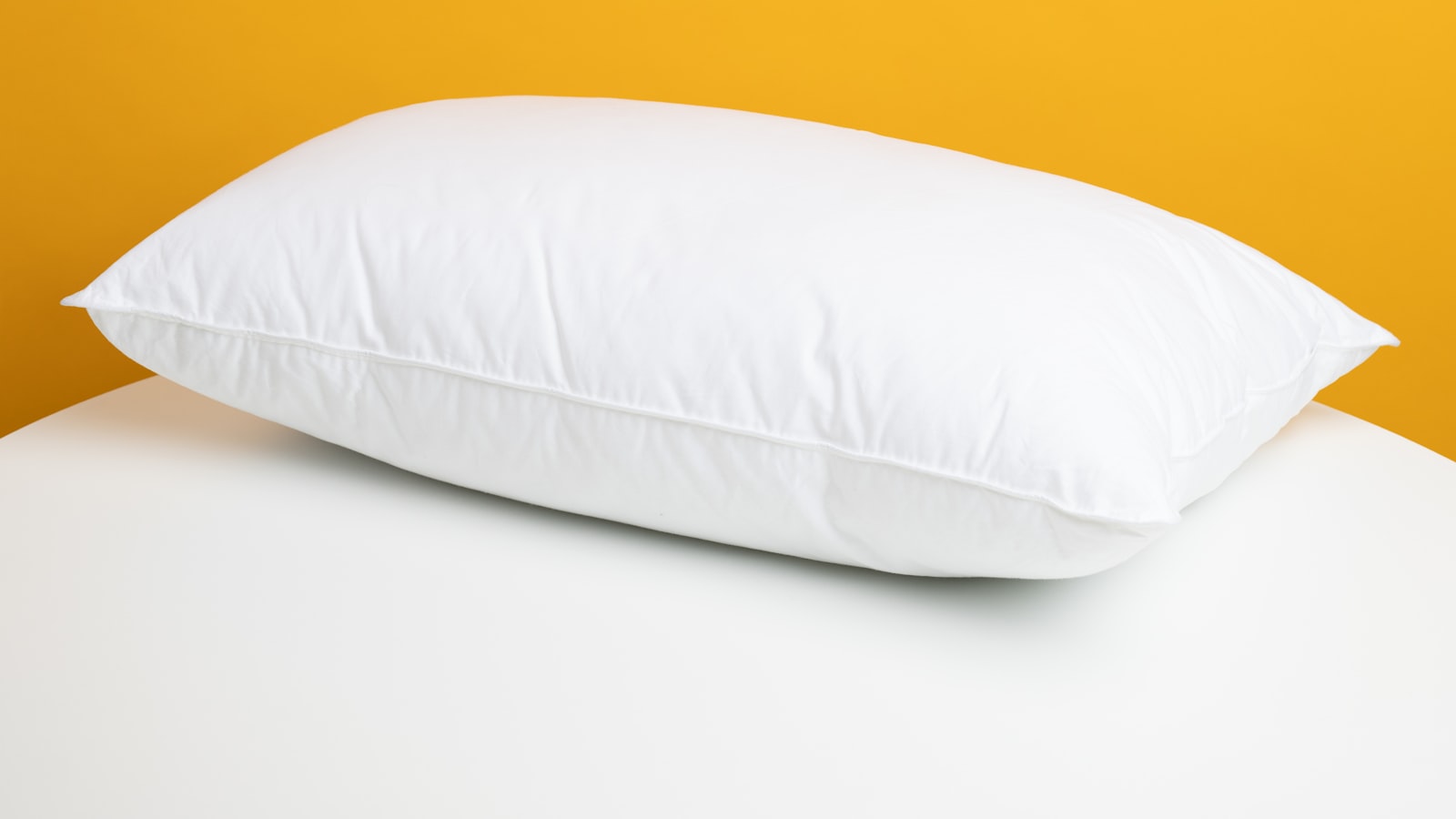
I have tested more pillows than I can honestly count, and the single most common mistake I see is people shopping for a pillow by brand or price before they have thought about how they actually sleep. A pillow is not a comfort accessory you throw on the bed for looks. It is a structural support device whose only real job is to keep your head, neck, and spine in a straight, relaxed line for seven or eight hours. Get that wrong and no amount of thread count or fancy fill will save you from waking up with a stiff neck.
Why sleep position is the starting point#
Before you look at fill materials or loft numbers, you need to know your default position. The gap between your mattress and your head is different for every position, and the pillow exists to bridge that gap.
- Side sleepers have the largest gap. Your shoulder lifts your head well off the mattress, so the space under your neck is wide.
- Back sleepers have a moderate gap. Your head naturally rests closer to the surface, but the curve of your neck still needs filling.
- Stomach sleepers have almost no gap. Your head is already close to the mattress, so anything tall pushes your neck backward.
The word to keep in mind is neutral. When your spine is neutral, your neck continues the same gentle line it has when you stand up straight with good posture. If you took a photo of yourself lying down, your nose, chin, and breastbone should roughly line up, and your chin should not be jammed toward your chest or tipped back toward the ceiling.
Most people are not purely one type. If you switch positions during the night, choose a pillow for the position you spend the most time in, and lean slightly toward the more demanding of your two positions.
Understanding loft and firmness#
These two words do most of the heavy lifting in any pillow decision, and they are not the same thing.
Loft is the height of the pillow when your head rests on it. A high-loft pillow keeps your head far from the mattress; a low-loft one lets it sink close.
Firmness is how much the pillow resists that pressure. A firm pillow holds its loft under the weight of your head; a soft one compresses.
Here is the trade-off that trips people up. A pillow can be tall but soft, which means it looks supportive on the shelf but collapses the moment you lie down. It can also be thin but firm, which sounds contradictory but is actually ideal for some sleepers. What matters is the loft you end up with after your head sinks in, not the loft you see in the packaging. This is exactly why buying online without a trial period is a gamble.
Side sleepers: fill the shoulder gap#
If you sleep on your side, you need the most support of any position. Your shoulder width creates a real, measurable distance between your ear and the mattress, and your pillow has to fill all of it.
- Choose a high loft, roughly the width of your shoulder from the mattress to the point where your neck starts.
- Choose a firm to medium-firm pillow that will not collapse under the concentrated weight of your head.
- Look for pillows marketed for side sleeping, which are often gusseted (they have a boxed side panel) to hold height along the edge.
The quick shoulder test#
Lie on your side in your normal position and have someone look at you from the front, or take a photo. Your head should be level, not tilting down toward the mattress or propped up toward the ceiling. If your head sags down, your pillow is too thin or too soft. If your chin is pushed up and away from your chest, it is too tall. Broader shoulders almost always need more loft than people expect, so do not assume a standard pillow is enough.
Back sleepers: support the neck curve#
Back sleeping is the most forgiving position, but the classic error is using a pillow that is far too thick. A tall pillow shoves your head forward and puts your neck into permanent flexion, which is the same posture as looking down at your phone all night.
- Aim for medium loft, enough to cradle the natural curve behind your neck without pushing your head up.
- Choose medium firmness so the pillow yields under your head but keeps supporting your neck.
- Consider a pillow with a slightly raised lower edge or a contoured shape, which tucks under the neck and lets the back of the head settle in.
If you wake up on your back and your chin is noticeably closer to your chest than it is when you stand, drop down a loft level. Many back sleepers are genuinely better off with a thinner pillow than they instinctively buy.
Stomach sleepers: go as thin as possible#
I will be honest here, because part of trustworthy advice is telling you the uncomfortable thing. Stomach sleeping is the hardest position on your neck, because you have to turn your head fully to one side to breathe. No pillow fixes that rotation. What a pillow can do is avoid making it worse.
- Choose the thinnest, softest pillow you can find, or in some cases no head pillow at all.
- Look for a soft, compressible fill that flattens easily, so your head stays close to the mattress.
- Put a thin pillow under your hips or lower stomach to reduce the arch in your lower back, which is a small change that makes a real difference.
If you are open to it, gently training yourself toward side sleeping with a body pillow to hug will protect your neck and lower back over the long run. It is not an overnight switch, but it is worth trying.
Matching fill to your needs#
Once loft and firmness are sorted, the fill material decides how the pillow feels and behaves over time. None of these is universally best; each has a genuine trade-off.
- Memory foam (solid). Contours closely and holds loft well, which suits side and back sleepers. The downsides are heat retention and a slow, sinking feel some people dislike.
- Shredded memory foam. Chunks of foam you can add or remove, so you can dial in the loft yourself. This adjustability is the biggest advantage, especially if you are between positions.
- Latex. Firm, springy, and durable, with better airflow than solid memory foam. It runs heavy and expensive, and the bounce is not for everyone.
- Down and feather. Soft, moldable, and light. It compresses a lot, so it works well for stomach sleepers and poorly for side sleepers who need lasting height. It also needs regular fluffing.
- Down alternative (polyester). Affordable and easy to wash, but it clumps and flattens faster than the others, so plan to replace it sooner.
If you cannot decide, a shredded foam pillow with a removable inner fill is the most flexible starting point, because you can adjust it after a few nights instead of committing blind.
When to replace your pillow#
A pillow that has lost its structure quietly sabotages good sleep, and most people keep theirs far too long. The simplest check is the fold test: fold the pillow in half, and if it stays folded instead of springing back open, its support is gone.
Other signs it is time to replace:
- You wake with neck or shoulder stiffness that eases as the day goes on.
- You find yourself folding or stacking the pillow to get enough height.
- There are permanent lumps, flat spots, or visible staining that washing does not fix.
A good pillowcase and a washable protector will extend the life of any pillow and keep it hygienic, but they cannot restore lost loft. When the fill no longer bounces back, the pillow is finished no matter how new it looks.
Putting it all together#
Start with your position, decide on the loft and firmness that keeps your spine neutral, then choose a fill that matches how you like a pillow to feel. Side sleepers go high and firm, back sleepers go medium and supportive, and stomach sleepers go thin and soft. Whenever you can, buy from somewhere with a trial period, because the only real test is a week of actual sleep, not a five-second press in a store. Get the pillow right and you stop thinking about it entirely, which is exactly the point.