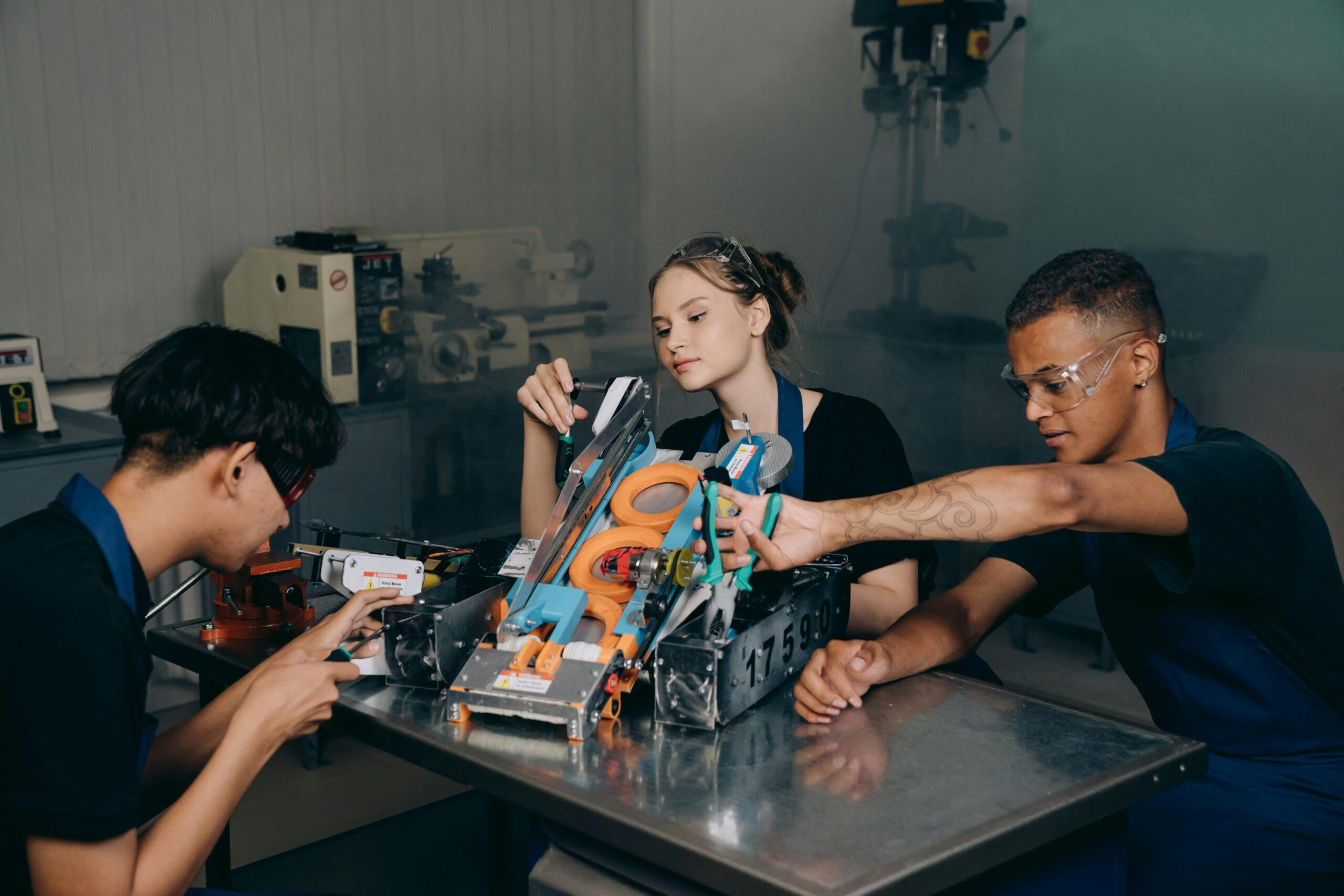
Artificial intelligence and robotics are no longer distant concepts from science fiction—they are reshaping our present and defining our future in profound ways.

As we stand at the crossroads of technological advancement and human values, the integration of AI robots into our daily lives presents both extraordinary opportunities and significant ethical challenges. The question is no longer whether AI robots will become part of our world, but rather how we can ensure their integration serves humanity’s best interests while preserving what makes us fundamentally human.
This journey toward a harmonious coexistence with intelligent machines requires careful consideration of ethical frameworks, societal impacts, and the very definition of what it means to live in a human-centric world enhanced by artificial intelligence.
🤖 Understanding the Current Landscape of AI Robotics
The landscape of AI robotics has evolved dramatically over the past decade. From manufacturing floors to healthcare facilities, from our homes to outer space exploration, AI-powered robots are increasingly becoming integral components of modern infrastructure. These sophisticated machines can now perform complex surgeries with precision beyond human capability, provide companionship to elderly individuals, and even create art that challenges our understanding of creativity.
Today’s AI robots leverage machine learning algorithms, natural language processing, and computer vision to interact with their environment in increasingly sophisticated ways. They learn from experience, adapt to new situations, and in some cases, make autonomous decisions that affect human lives. This remarkable progress has been fueled by exponential growth in computing power, vast amounts of training data, and breakthrough innovations in neural network architectures.
However, this technological prowess comes with a responsibility to ensure that these systems align with human values and serve the greater good. The integration of AI robots must be approached with intentionality, foresight, and a deep commitment to ethical principles that prioritize human welfare above purely technological or economic considerations.
The Human-Centric Philosophy: Putting People First 🌟
A human-centric approach to AI robotics begins with a fundamental principle: technology should serve humanity, not the other way around. This philosophy demands that we design, develop, and deploy AI systems with human needs, values, and well-being at the center of every decision.
What does human-centric AI actually mean in practice? It means creating robots that enhance human capabilities rather than simply replacing them. It means ensuring that AI systems are transparent, explainable, and accountable. It means prioritizing accessibility so that the benefits of AI robotics reach all segments of society, not just the privileged few.
Human-centric AI also recognizes that humans have emotional, social, and psychological needs that extend beyond mere efficiency or productivity. An AI robot caring for an elderly person must understand not just medical protocols but also the importance of dignity, companionship, and emotional connection. A robot in an educational setting must recognize that learning is as much about inspiration and curiosity as it is about information transfer.
Core Principles of Human-Centric AI Integration
Several foundational principles should guide our approach to integrating AI robots into society. These principles form the bedrock upon which ethical AI development must be built:
- Transparency: AI systems should be understandable and their decision-making processes should be explainable to users and stakeholders
- Fairness: AI robots must be designed to avoid bias and discrimination, treating all individuals with equal consideration
- Privacy: Personal data collected by AI systems must be protected and used only with explicit consent and for specified purposes
- Accountability: Clear lines of responsibility must exist for AI robot actions, with humans ultimately responsible for oversight
- Safety: AI systems must be rigorously tested and include fail-safe mechanisms to prevent harm
- Empowerment: AI robots should enhance human capabilities and autonomy rather than diminish them
Navigating the Ethical Minefield of AI Robotics ⚖️
The ethical challenges surrounding AI robots are complex and multifaceted. As these systems become more autonomous and influential, we face difficult questions that don’t have simple answers. How much decision-making authority should we delegate to machines? Who is responsible when an AI robot makes a mistake? How do we balance innovation with caution?
One of the most pressing ethical concerns involves employment and economic disruption. While AI robots can perform many tasks more efficiently than humans, the widespread automation of jobs poses significant challenges to workforce stability and social cohesion. A human-centric approach must address these concerns through education, retraining programs, and potentially new economic models that ensure prosperity is shared broadly.
The Autonomy Dilemma
As AI robots become more capable of independent action, we face crucial questions about autonomy. In healthcare, should an AI system be allowed to make treatment decisions without human approval? In transportation, how much control should autonomous vehicles have in emergency situations? These questions touch on deep philosophical issues about agency, responsibility, and the nature of decision-making itself.
The key is finding the right balance between leveraging AI capabilities and maintaining meaningful human control. This concept, often called “human-in-the-loop” or “human-on-the-loop” design, ensures that humans remain actively involved in critical decisions while allowing AI systems to handle routine tasks efficiently.
Building Trust Through Transparent AI Systems 🔍
Trust is the cornerstone of successful AI robot integration. Without public trust, even the most beneficial AI technologies will face resistance and limited adoption. Building this trust requires transparency at every level—from data collection and algorithm design to deployment and monitoring.
Explainable AI (XAI) has emerged as a crucial field addressing this need. XAI techniques allow AI systems to provide understandable justifications for their decisions, making it possible for users to comprehend why a robot took a particular action. This transparency is especially critical in high-stakes domains like healthcare, criminal justice, and financial services.
Companies and organizations developing AI robots must also be transparent about their limitations. Overpromising capabilities or downplaying risks erodes trust and can lead to dangerous misapplications of technology. Honest communication about what AI can and cannot do is essential for setting appropriate expectations and fostering responsible use.
AI Robots in Healthcare: Compassion Meets Technology 💊
Healthcare represents one of the most promising yet ethically complex domains for AI robot integration. Surgical robots already assist in delicate procedures with superhuman precision. AI diagnostic systems can detect diseases from medical images with accuracy rivaling or exceeding human experts. Robotic assistants help nurses with routine tasks, freeing them to focus on patient care.
However, healthcare is fundamentally about caring for human beings in their most vulnerable moments. The integration of AI robots in this domain must never lose sight of the human element—the empathy, compassion, and emotional intelligence that define quality care. A robot might be able to measure vital signs perfectly, but can it recognize when a patient needs reassurance or comfort?
The most successful healthcare AI systems are those designed to augment rather than replace human caregivers. They handle data-intensive tasks, provide decision support, and extend the reach of healthcare professionals, while leaving the essential human connection intact. This partnership model represents the ideal of human-centric AI: technology empowering people to do what they do best.
Education Reimagined: AI Robots as Learning Partners 📚
Educational AI robots offer tremendous potential to personalize learning, provide individualized attention, and make quality education more accessible. These systems can adapt to each student’s pace and learning style, offer instant feedback, and never lose patience with repeated questions.
Yet education is about more than information transfer. It involves mentorship, inspiration, social development, and the cultivation of critical thinking skills. AI robots in education must be designed to complement teachers, not replace them. The goal should be to free educators from administrative burdens and routine tasks so they can focus on the uniquely human aspects of teaching—inspiring curiosity, fostering creativity, and helping students develop their full potential.
Some educational institutions are already experimenting with AI tutoring systems that provide personalized support to students outside regular class hours. These tools can be particularly valuable in underserved communities where access to additional educational resources is limited. However, careful attention must be paid to ensuring these systems don’t perpetuate existing biases or create new forms of educational inequality.
The Workplace Transformation: Collaboration Over Replacement 💼
The impact of AI robots on employment is perhaps the most widely discussed and feared aspect of this technology. While concerns about job displacement are legitimate, the reality is more nuanced than simple replacement scenarios suggest. History shows that technological revolutions typically create new types of jobs even as they eliminate others.
A human-centric approach to workplace AI focuses on collaboration between humans and robots. This model, sometimes called “cobots” (collaborative robots), leverages the strengths of both. Robots excel at repetitive, physically demanding, or precision tasks, while humans bring creativity, emotional intelligence, adaptability, and complex problem-solving abilities.
Organizations implementing AI robots should prioritize reskilling and upskilling programs that help workers transition to new roles. Rather than viewing automation as a way to reduce headcount, forward-thinking companies see it as an opportunity to elevate their workforce to more valuable, fulfilling work. This approach not only addresses ethical concerns but also makes good business sense by retaining institutional knowledge and fostering innovation.
Privacy and Data Protection in the Age of AI 🔐
AI robots are data-hungry by nature. They require vast amounts of information to learn, adapt, and function effectively. This creates significant privacy challenges, especially as robots become more integrated into our homes and personal spaces.
A robot vacuum cleaner maps your home layout. A personal assistant listens to your conversations. A healthcare robot monitors your vital signs and health behaviors. All this data could be invaluable for improving services, but it also represents potential vulnerabilities and privacy invasions if mishandled.
Ethical AI robot integration demands robust data protection measures. This includes data minimization (collecting only what’s necessary), purpose limitation (using data only for specified purposes), strong encryption, and clear consent mechanisms. Users should have meaningful control over their data, including the ability to review, correct, and delete information about themselves.
Regulatory frameworks like GDPR in Europe and emerging privacy laws elsewhere provide important protections, but technology evolves faster than legislation. Companies developing AI robots have an ethical obligation to go beyond minimal legal compliance and implement privacy-by-design principles that protect users even in the absence of specific regulations.
Addressing Bias and Ensuring Fairness ⚖️
AI systems can perpetuate and even amplify human biases if not carefully designed and monitored. Since AI robots learn from data that reflects historical patterns, they may inherit societal prejudices related to race, gender, age, or other characteristics. This problem is particularly serious in high-stakes applications like hiring, lending, law enforcement, and healthcare.
Creating fair AI robots requires intentional effort throughout the development process. This includes using diverse training data, employing diverse development teams, conducting bias audits, and implementing fairness metrics. It also requires ongoing monitoring after deployment, as bias can emerge in unexpected ways when systems interact with real-world complexity.
Some organizations are developing AI fairness toolkits and frameworks to help developers identify and mitigate bias. However, technical solutions alone are insufficient. Addressing AI bias requires diverse perspectives, ethical oversight, and a commitment to equity that goes beyond algorithmic adjustments to address underlying systemic issues.
Governance and Regulation: Setting Guardrails for Innovation 📋
As AI robots become more powerful and prevalent, appropriate governance frameworks become increasingly essential. These frameworks must balance the need to protect public welfare with the desire to foster innovation and avoid stifling beneficial technological development.
Effective AI governance involves multiple stakeholders: governments, industry, academia, civil society, and the public. It requires international cooperation, as AI development is global and challenges don’t respect national borders. Some countries and regions have already implemented AI regulations, while others are developing frameworks based on principles rather than prescriptive rules.
Industry self-regulation also plays an important role. Many leading technology companies have established AI ethics boards, principles, and review processes. While these voluntary measures are valuable, they work best when complemented by external oversight and accountability mechanisms that ensure commitments translate into practice.
Looking Forward: A Vision for Human-AI Symbiosis 🌈
The future of AI robots need not be a dystopian scenario of human displacement or loss of agency. Instead, we can work toward a vision of human-AI symbiosis where intelligent machines amplify human potential, extend our capabilities, and help us address some of our most pressing challenges.
Imagine AI robots helping us combat climate change by optimizing energy systems and developing sustainable materials. Picture healthcare robots extending quality care to remote and underserved populations. Envision educational AI systems providing personalized learning to every child regardless of geographic or economic circumstances. Consider how robotic assistants might enable elderly individuals to maintain independence and dignity longer.
This positive vision is achievable, but it requires intentional choices and sustained commitment to ethical principles. It demands that we remain actively engaged in shaping AI development rather than passively accepting whatever emerges from market forces or technological momentum alone.
Practical Steps Toward Ethical AI Integration 🛠️
Moving from principles to practice requires concrete actions at individual, organizational, and societal levels. Organizations developing or deploying AI robots should establish ethics committees with diverse representation to review projects and provide guidance. They should conduct regular impact assessments that examine potential consequences across different stakeholder groups.
Education systems need to prepare students not just to work with AI but to think critically about its implications. This includes technical education for those who will develop these systems and broader digital literacy for everyone who will live in AI-augmented environments.
Policymakers should engage with technologists, ethicists, and affected communities to develop thoughtful regulations that protect public interest while allowing beneficial innovation. This process should be ongoing, adapting as technology evolves and we learn more about real-world impacts.
As individuals, we can make informed choices about which AI products and services we use, support companies that demonstrate ethical practices, and participate in public discussions about AI governance. Our collective voice matters in shaping the future we want to see.

Embracing the Journey Together 🤝
The integration of AI robots into human society is not a destination but an ongoing journey. It’s a process that will continue evolving as technology advances and our understanding deepens. Mistakes will be made, unintended consequences will emerge, and course corrections will be necessary.
What matters most is our commitment to learning, adapting, and maintaining focus on human welfare as our guiding principle. By embracing a human-centric approach to AI robotics—one that prioritizes transparency, fairness, accountability, and empowerment—we can harness the tremendous potential of these technologies while preserving and enhancing what makes us human.
The future we create with AI robots will reflect the values and choices we make today. It’s up to all of us to ensure that future is one where technology serves humanity’s highest aspirations, where innovation is balanced with wisdom, and where the integration of intelligent machines makes our world more compassionate, equitable, and human-centric.
This is not just a technological challenge but a profoundly human one. It calls upon our capacity for foresight, our commitment to ethical principles, and our ability to cooperate across boundaries and differences. The journey toward beneficial AI integration is one we must undertake together, with open minds, critical thinking, and unwavering dedication to building a future that works for everyone.