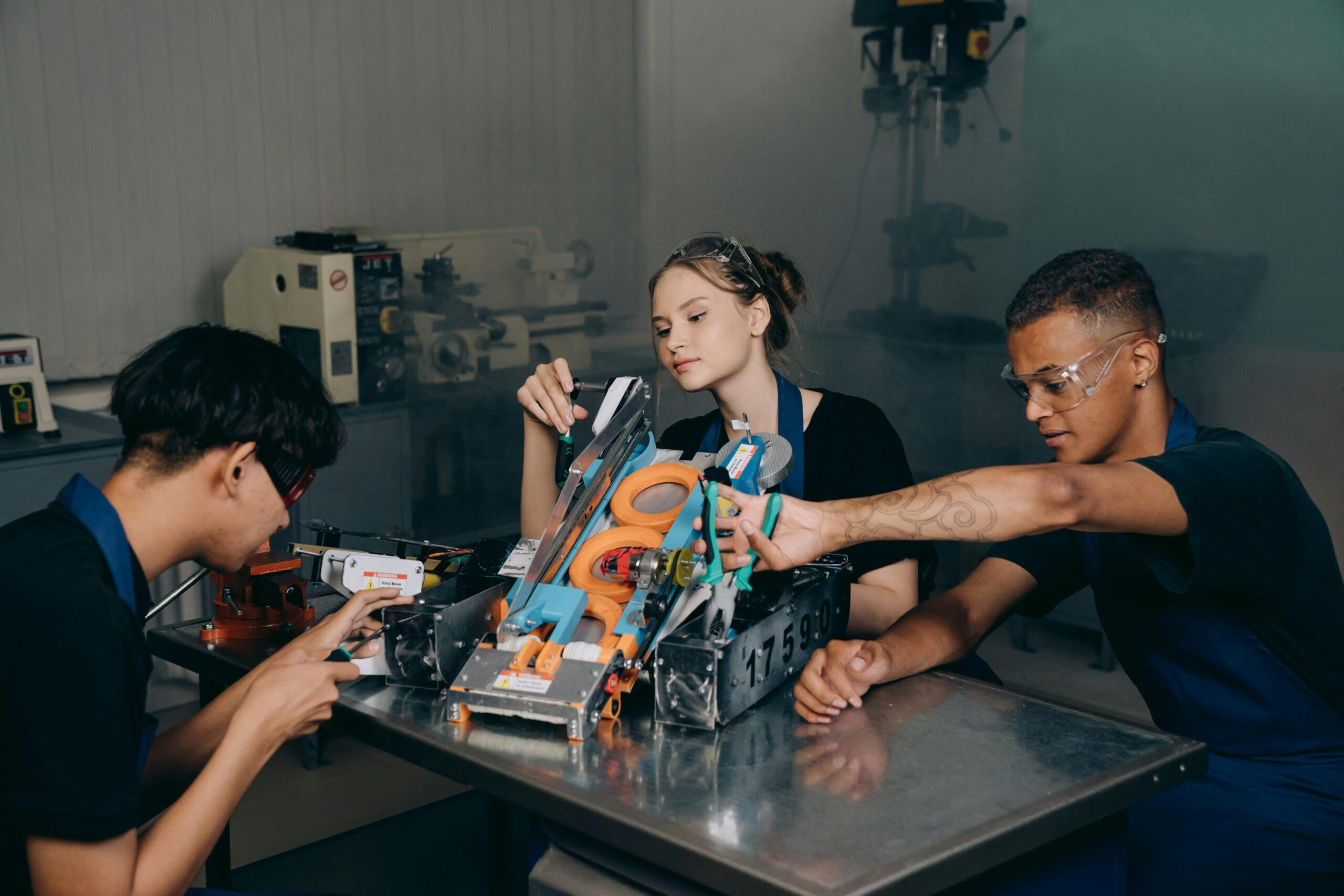
Cultural robotics is reshaping how we perceive technology, blending human creativity with artificial intelligence to forge new pathways for societal transformation and innovation.

🤖 The Emergence of Cultural Robotics: A New Paradigm
The intersection of culture and robotics represents one of the most fascinating developments in contemporary technology. Cultural robotics explores how robotic systems can embody, preserve, and transmit cultural values, traditions, and social norms across generations. This emerging field challenges the conventional view of robots as purely functional machines, instead positioning them as cultural artifacts that reflect and influence human societies.
As we advance deeper into the 21st century, the relationship between humans and robots continues to evolve beyond industrial applications. Robots are increasingly entering cultural spaces—museums, theaters, educational institutions, and even religious ceremonies. This cultural integration demands a multidisciplinary approach that combines engineering, anthropology, sociology, and design thinking.
The concept of cultural robotics emerged from recognizing that technology never exists in a vacuum. Every robot designed, manufactured, and deployed carries implicit cultural assumptions about behavior, communication, and social interaction. Understanding these cultural dimensions is essential for creating robotic systems that can genuinely integrate into diverse human societies without causing cultural friction or misunderstanding.
📚 Historical Context: From Industrial Machines to Cultural Agents
The evolution of robotics from industrial automation to cultural participation marks a significant shift in technological development. Early robots, designed primarily for manufacturing and repetitive tasks, operated in controlled environments with minimal human interaction. These machines were cultural outsiders, designed to replace human labor rather than engage with human culture.
The transition began when researchers started developing service robots intended for human environments. Suddenly, questions of appearance, behavior, and communication became critical. How should a robot greet someone? What cultural norms should guide its personal space calculations? Should it make eye contact, and if so, how much?
Pioneering work in Japan, particularly with humanoid robots like ASIMO and social robots like Pepper, demonstrated that cultural context profoundly influences robot acceptance and effectiveness. Japanese cultural values around harmony, respect, and the blurred boundaries between animate and inanimate objects created a uniquely receptive environment for social robotics. This cultural specificity highlighted the need for culturally-aware robot design.
🌍 Cultural Robotics Across Different Societies
Different cultures exhibit remarkably varied attitudes toward robots, shaped by historical narratives, religious beliefs, and social structures. These cultural differences have profound implications for robot design, deployment, and acceptance.
Eastern Perspectives: Harmony with Technology
In many East Asian cultures, particularly Japan and South Korea, robots enjoy high levels of acceptance. This receptivity stems from cultural narratives that don’t rigidly separate the animate from the inanimate. Shinto beliefs in Japan, for example, suggest that all objects possess a spirit or essence, making the idea of emotional connections with robots less foreign.
Japanese cultural robotics has pioneered companion robots designed to provide emotional support, particularly for elderly populations. These robots incorporate culturally-specific communication styles, understanding concepts like tatemae (public face) and honne (true feelings), which are fundamental to Japanese social interaction.
Western Perspectives: Cautious Integration
Western cultures, influenced by Judeo-Christian traditions and science fiction narratives, often exhibit more ambivalence toward robots. Concerns about robots replacing human workers, privacy invasion, and the loss of human agency feature prominently in Western discourse about robotics.
However, Western cultural robotics has excelled in creating robots for education, entertainment, and creative expression. Museums across Europe and North America increasingly deploy robots as guides and interactive exhibits, designing them to embody institutional values of knowledge-sharing and accessibility.
Middle Eastern and African Perspectives: Emerging Dialogues
In Middle Eastern and African contexts, cultural robotics remains in earlier developmental stages, but fascinating initiatives are emerging. Robots designed to teach Arabic language and Islamic values demonstrate how cultural specificity shapes educational technology. African innovators are exploring how robotics can address continent-specific challenges while respecting diverse cultural traditions and community structures.
🎨 Robots as Cultural Preservers and Storytellers
One of the most compelling applications of cultural robotics involves using robotic systems to preserve and transmit cultural heritage. As globalization threatens cultural diversity, robots offer innovative methods for keeping traditions alive.
Museums worldwide are deploying robotic guides programmed with extensive knowledge about cultural artifacts, capable of sharing stories in multiple languages and adapting their presentations to visitor backgrounds. These robots don’t merely recite facts; they contextualize cultural objects within broader social and historical narratives.
In indigenous communities, researchers are exploring how robots might help preserve endangered languages. By creating interactive language-learning companions that understand cultural context and traditional storytelling methods, cultural robotics could support language revitalization efforts. These applications require deep collaboration with community members to ensure cultural sensitivity and authenticity.
Performance robots represent another fascinating dimension of cultural preservation. Traditional dance movements, theatrical gestures, and ceremonial practices can be encoded into robotic performers, creating living archives of cultural expression. While controversial—some argue robots cannot authentically represent human cultural practices—these projects spark important conversations about authenticity, tradition, and technological mediation.
💡 Designing for Cultural Intelligence
Creating culturally intelligent robots requires methodologies that go far beyond technical engineering. Designers must engage in extensive ethnographic research, community consultation, and iterative testing within cultural contexts.
Key Design Considerations
- Communication Styles: Understanding how different cultures use verbal and non-verbal communication, including gestures, eye contact, and personal space preferences
- Aesthetic Preferences: Recognizing that appealing design varies dramatically across cultures, from color symbolism to form preferences
- Social Roles: Identifying appropriate social positions for robots within different cultural hierarchies and relationship structures
- Value Alignment: Ensuring robot behaviors reflect culturally-specific values like individualism versus collectivism, hierarchy versus equality
- Religious Sensitivity: Respecting religious beliefs that may influence attitudes toward artificial intelligence and human-like machines
Participatory design approaches, where community members actively contribute to robot development, help ensure cultural appropriateness. Rather than imposing externally-designed robots onto communities, this approach treats cultural knowledge as essential expertise that shapes technological development from inception.
🔬 Research Frontiers in Cultural Robotics
Academic researchers worldwide are pushing the boundaries of cultural robotics through interdisciplinary investigations. These research efforts address fundamental questions about human-robot interaction, cultural adaptation, and the future of culturally-embedded technologies.
One promising research direction involves developing robots with cultural learning capabilities. Rather than being programmed with fixed cultural scripts, these adaptive systems observe human interactions and gradually learn culturally-appropriate behaviors. Machine learning algorithms analyze social cues, communication patterns, and feedback signals to refine robot behavior over time.
Another frontier explores how robots can serve as cultural translators or mediators. In increasingly multicultural societies, robots capable of understanding multiple cultural frameworks could facilitate cross-cultural communication, helping people from different backgrounds understand each other’s perspectives and communication styles.
Researchers are also investigating the ethical dimensions of cultural robotics. Questions about cultural appropriation, authenticity, and power dynamics arise when robots represent or interact with cultures different from their designers. Establishing ethical guidelines for culturally-sensitive robot development remains an ongoing challenge requiring input from diverse stakeholders.
🏥 Cultural Robotics in Healthcare and Elder Care
Healthcare represents one of the most culturally-sensitive domains for robotic deployment. Care practices, attitudes toward illness and aging, and preferences for human versus technological intervention vary enormously across cultures.
In Japan, robots like PARO (a therapeutic seal robot) have achieved remarkable success in elder care facilities. PARO’s design reflects Japanese cultural aesthetics and approaches to care, providing comfort and companionship without the demanding reciprocity required in human relationships. This aligns with cultural values that prioritize not burdening others.
However, these same robots often receive less enthusiastic reception in cultures with different elder care traditions. Mediterranean and Latin American cultures, which typically emphasize extended family care and human warmth, may view care robots as inadequate substitutes for human attention rather than helpful supplements.
Culturally-adapted healthcare robots must navigate complex issues around physical contact, privacy, gender norms, and family involvement in care decisions. A robot providing intimate care assistance must understand culturally-specific boundaries and preferences, adapting its approach to align with patient values.
📖 Education and Cultural Robotics: Learning Together
Educational robotics offers tremendous potential for culturally-responsive learning. Robots designed as teaching assistants or learning companions can adapt to different educational philosophies, learning styles, and cultural contexts.
In cultures that emphasize collaborative learning, educational robots can facilitate group activities and peer-to-peer teaching. In contexts that prioritize individual achievement and competition, the same robotic systems might adapt to provide personalized instruction and individual assessment.
Language learning represents a particularly promising application. Robots can provide patient, non-judgmental conversation practice for language learners while incorporating cultural context into lessons. A robot teaching Spanish might discuss different cultural practices across Spanish-speaking countries, or explain regional variations in the language.
Cultural robotics in education also raises important questions about what values and knowledge we want to transmit to younger generations. Educational robots inevitably embody certain cultural assumptions about learning, authority, and knowledge itself, making transparent design processes essential.
🌐 The Future Landscape: Challenges and Opportunities
As cultural robotics matures, several critical challenges and opportunities will shape its development. Addressing these proactively will determine whether cultural robotics fulfills its potential to enhance human cultural life or becomes another source of technological disruption and inequality.
Accessibility remains a primary concern. Currently, advanced cultural robots are predominantly developed and deployed in wealthy nations and institutions. Ensuring that diverse communities worldwide can participate in and benefit from cultural robotics requires addressing economic barriers, infrastructure limitations, and knowledge gaps.
Standardization versus customization presents an ongoing tension. While some standardization facilitates development and reduces costs, excessive standardization risks cultural homogenization. Finding the right balance—perhaps through modular systems that allow cultural customization within standardized frameworks—will be crucial.
The rapid pace of technological change also challenges cultural robotics. Traditional cultures often change slowly, with practices and values transmitted across generations. How can cultural robotics honor this continuity while embracing technological innovation? This question requires ongoing dialogue between technologists and cultural communities.

🚀 Envisioning Tomorrow: Cultural Robotics and Human Flourishing
Looking forward, cultural robotics holds enormous potential to support human cultural flourishing in an increasingly technological world. Rather than viewing robots as threats to cultural authenticity or human connection, we might recognize them as tools that, when thoughtfully designed, can enhance cultural transmission, facilitate cross-cultural understanding, and preserve endangered cultural practices.
The most promising future for cultural robotics is one where technology serves culture rather than supplanting it. Robots designed with deep cultural awareness and community participation can become valuable cultural partners—preserving languages, teaching traditions, facilitating cultural exchange, and supporting culturally-appropriate care and education.
This future requires sustained commitment to interdisciplinary collaboration, ethical reflection, and inclusive design processes. Engineers must partner with anthropologists, artists, community leaders, and cultural practitioners. Funding structures must support long-term, community-engaged research rather than only quick technological fixes.
Ultimately, cultural robotics invites us to reconsider fundamental questions about technology, culture, and humanity. What makes us human? How do we maintain cultural identity in a globalizing world? Can technology enhance rather than diminish our connections to cultural heritage and to each other?
The answers to these questions will emerge not from technology alone but from thoughtful, inclusive conversations about the future we want to create. Cultural robotics, at its best, provides tools and frameworks for having these conversations and building technological futures that honor human cultural diversity while embracing innovation.
As we stand at this technological threshold, the choices we make today about cultural robotics will reverberate for generations. By prioritizing cultural intelligence, ethical design, and community participation, we can ensure that robots become partners in preserving and enriching human cultural life rather than forces that erode it. The future of cultural robotics, like culture itself, will be what we collectively create through our choices, values, and commitments.