The integration of robotics into our workforce is no longer science fiction—it’s our present reality and the foundation of tomorrow’s economy. 🤖

As we stand at the crossroads of technological advancement and human progress, the question isn’t whether robots will transform our workplaces, but how we can ensure this transformation benefits everyone. The emergence of robotic workforce models presents unprecedented opportunities for productivity, innovation, and economic growth, yet it simultaneously raises critical questions about employment, equity, and the fundamental nature of work itself.
Building a sustainable future requires us to develop ethical frameworks that guide the deployment of robotic technologies in ways that enhance human dignity, protect workers’ rights, and distribute prosperity fairly across society. This isn’t merely about programming machines—it’s about programming our values into the systems that will shape the next century of human civilization.
Understanding the Robotic Workforce Revolution 🌐
The modern robotic workforce extends far beyond the mechanical arms that once defined factory automation. Today’s robots encompass artificial intelligence systems, autonomous vehicles, service robots, and sophisticated software agents that can perform increasingly complex cognitive tasks. From healthcare diagnostics to financial analysis, from warehouse logistics to customer service, robotic systems are reshaping virtually every industry sector.
This transformation is accelerating at an unprecedented pace. Industry analysts project that the global market for professional service robots will exceed $100 billion within the next decade, while collaborative robots—designed to work safely alongside humans—are becoming standard equipment in manufacturing facilities worldwide. The COVID-19 pandemic accelerated this trend dramatically, as businesses sought contactless solutions and resilient operational models that could withstand future disruptions.
Yet the robotic workforce isn’t simply replacing human workers. In many cases, these technologies are augmenting human capabilities, taking over dangerous, repetitive, or physically demanding tasks while freeing people to focus on creative problem-solving, emotional intelligence work, and strategic decision-making that remains uniquely human.
The Ethical Imperative: Why Values Matter in Automation
Ethics in robotics extends beyond preventing physical harm or ensuring data privacy. It encompasses broader questions about societal impact, economic justice, and the kind of future we want to create. When companies deploy robotic systems without considering these dimensions, they risk exacerbating inequality, creating technological unemployment, and building systems that reflect and amplify existing biases.
Consider the example of algorithmic hiring systems that inadvertently discriminate against certain demographic groups, or warehouse robots that increase productivity while subjecting human workers to unsustainable performance pressures. These scenarios illustrate how technically sophisticated systems can produce ethically problematic outcomes when deployed without adequate consideration of their human impact.
Ethical robotic workforce models require stakeholders to address several fundamental questions: Who benefits from automation gains? How do we protect workers displaced by technology? What rights should employees have regarding robotic surveillance and performance monitoring? How do we ensure that decision-making algorithms are transparent, accountable, and free from bias?
Key Ethical Principles for Robotic Integration ✨
Developing ethical frameworks for robotic workforces requires commitment to several core principles that balance innovation with human welfare:
- Human-Centered Design: Robotic systems should be designed to enhance human capabilities and wellbeing rather than simply maximize efficiency metrics that may harm workers.
- Transparency and Explainability: Workers and the public deserve to understand how automated systems make decisions that affect their lives and livelihoods.
- Fairness and Non-Discrimination: Robotic systems must be rigorously tested and monitored to prevent discriminatory outcomes based on race, gender, age, disability, or other protected characteristics.
- Privacy Protection: Worker surveillance through robotic systems must respect privacy rights and be limited to legitimate business purposes with appropriate safeguards.
- Accountability Structures: Clear lines of responsibility must exist when robotic systems cause harm or make errors, preventing the diffusion of accountability that can occur with automated decision-making.
Sustainable Economic Models: Sharing Automation’s Benefits 💼
One of the most significant ethical challenges posed by robotic workforces is ensuring that productivity gains translate into broadly shared prosperity rather than concentrating wealth among technology owners and investors. Historical precedent shows that technological transitions can either expand or contract the middle class, depending on how societies manage the distribution of benefits.
Progressive companies are experimenting with innovative models that distribute automation gains more equitably. Some organizations are implementing profit-sharing arrangements where automation-driven productivity improvements result in bonuses for all employees, not just executives. Others are investing automation savings into workforce development programs that prepare workers for higher-skilled positions.
The concept of stakeholder capitalism offers a framework for thinking about robotic workforce integration that extends beyond shareholder value maximization. Under this model, companies consider the interests of employees, communities, customers, and society alongside investor returns, creating sustainable business models that build long-term trust and social license to operate.
Innovative Compensation and Transition Models
Several promising approaches are emerging for managing the economic transitions associated with workforce automation. These include portable benefits systems that provide healthcare and retirement security regardless of employment status, wage insurance programs that cushion income losses for displaced workers transitioning to new careers, and universal basic income pilots that provide unconditional cash transfers to offset technological unemployment.
Forward-thinking jurisdictions are also exploring automation taxes or robot levies that capture a portion of productivity gains for public investment in education, infrastructure, and social safety nets. While controversial, these mechanisms recognize that technological progress generates positive externalities and social costs that markets alone may not efficiently allocate.
Reskilling and Lifelong Learning: Preparing the Human Workforce 📚
Perhaps the most critical component of ethical robotic workforce integration is investment in human capital development. As automation transforms job requirements across industries, workers need accessible pathways to acquire new skills and transition into emerging roles that complement rather than compete with robotic systems.
Effective reskilling programs share several characteristics. They provide hands-on experience with relevant technologies, offer flexible learning formats that accommodate working adults, issue credentials recognized by employers, and include career counseling that helps individuals identify viable transition paths. The most successful programs partner closely with employers to ensure curriculum alignment with actual labor market needs.
Companies implementing large-scale automation have both practical and ethical obligations to invest in reskilling. Amazon’s Career Choice program, which pre-pays tuition for employees pursuing in-demand fields, and AT&T’s Future Ready initiative, which has retrained over half its workforce for digital economy jobs, represent models worth examining for their scale and commitment to worker development.
Educational Institutions and the Skills Gap
Traditional educational institutions must also evolve to meet the demands of a robot-integrated economy. This means moving beyond discipline-specific technical training toward cultivating adaptable competencies like critical thinking, creative problem-solving, emotional intelligence, and collaborative skills that remain distinctively human even as technical tasks become automated.
Micro-credentialing and modular learning approaches allow workers to continuously update skills without pursuing lengthy degree programs. Online learning platforms enable accessible, affordable education at scale. Apprenticeship models that combine classroom instruction with workplace experience provide proven pathways into skilled careers that work alongside advanced technologies.
Collaborative Human-Robot Work Environments 🤝
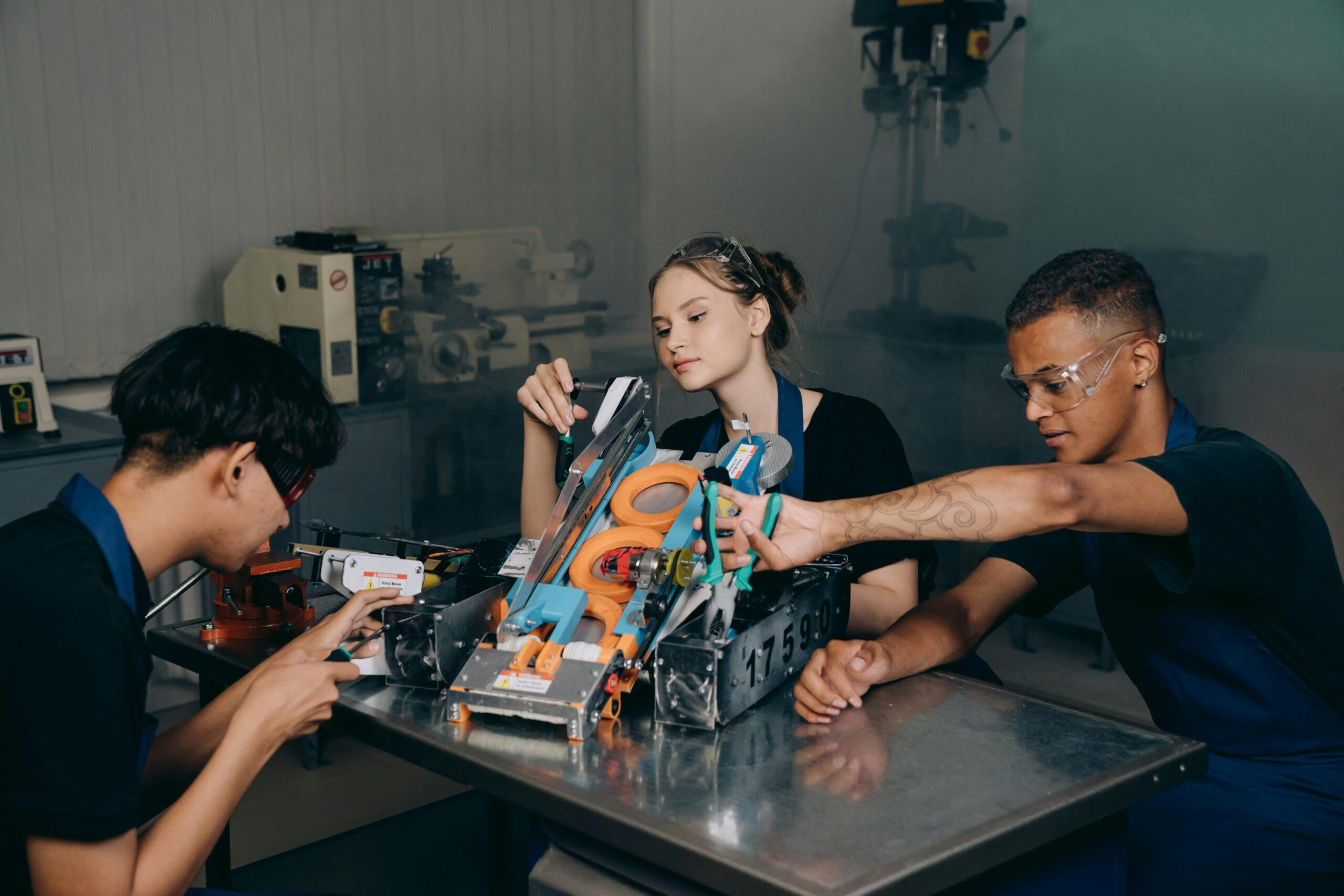
The future of work isn’t humans versus robots—it’s humans working with robots in complementary partnerships that leverage the strengths of both. Collaborative robotics, or “cobots,” represent a design philosophy that prioritizes safe, productive human-machine interaction over complete automation.
In manufacturing, cobots handle heavy lifting, precise repetitive movements, and exposure to hazardous materials while human workers contribute judgment, flexibility, and fine motor skills. In healthcare, robotic systems assist with patient monitoring, medication dispensing, and physical therapy while nurses and doctors provide empathy, complex diagnosis, and treatment decision-making.
Creating effective collaborative environments requires thoughtful workplace design, comprehensive training, and organizational cultures that view technology as a tool for worker empowerment rather than replacement. When workers participate in the design and implementation of robotic systems, adoption succeeds more reliably and benefits are distributed more fairly.
Safety and Wellbeing in Mixed Workforces
Physical safety standards for human-robot collaboration have advanced significantly, with sensors, force-limiting mechanisms, and sophisticated control systems preventing collisions and injuries. However, psychological wellbeing in automated workplaces receives less attention despite being equally important.
Workers report stress, anxiety, and decreased job satisfaction when robotic systems set unsustainable performance expectations, enable intrusive surveillance, or create feelings of obsolescence. Ethical robotic workforce models must address these concerns through reasonable performance standards, transparent monitoring policies, and organizational commitments to human dignity that extend beyond physical safety to encompass mental health and professional fulfillment.
Governance Frameworks and Policy Innovation 🏛️
Individual company ethics and voluntary standards, while valuable, cannot alone ensure that robotic workforce integration proceeds in socially beneficial directions. Effective governance requires multi-stakeholder collaboration involving businesses, workers, governments, civil society organizations, and technologists working together to establish norms, standards, and regulations.
Several jurisdictions are pioneering policy approaches worth examining. The European Union’s proposed AI Act establishes risk-based requirements for artificial intelligence systems, including those used in employment contexts. Singapore’s Model AI Governance Framework provides practical guidance for responsible AI deployment. California’s laws requiring algorithmic impact assessments for certain automated decision systems create accountability mechanisms.
Labor unions and worker organizations play vital roles in ensuring that automation serves worker interests. Collective bargaining agreements increasingly address technology deployment, including provisions for advance notice, retraining opportunities, and worker input into implementation decisions. These negotiated approaches can be more flexible and context-sensitive than one-size-fits-all regulations.
International Standards and Cross-Border Challenges
Given the global nature of technology development and deployment, international cooperation on robotic workforce standards becomes essential. Organizations like the International Labour Organization, the Organisation for Economic Co-operation and Development, and the International Organization for Standardization are developing frameworks for ethical AI and robotics in employment contexts.
However, meaningful international standards must accommodate diverse cultural values, economic development levels, and governance approaches while establishing universal minimum protections for human dignity and rights. This balance remains difficult to achieve but essential for preventing a “race to the bottom” where jurisdictions compete by lowering ethical standards.
Environmental Sustainability and Green Robotics 🌱
Building a sustainable future requires considering environmental dimensions alongside social and economic factors. Robotic systems can contribute to sustainability goals through optimized resource utilization, precision agriculture, renewable energy management, and environmental monitoring. Conversely, the production, operation, and disposal of robotic systems consume energy and materials with significant environmental footprints.
Ethical robotic workforce models must incorporate lifecycle thinking that accounts for environmental impacts from raw material extraction through end-of-life disposal. This includes prioritizing energy-efficient designs, using sustainable materials, enabling repair and upgrade rather than replacement, and establishing robust recycling programs for electronic components.
Companies like Fairphone demonstrate that electronics manufacturing can prioritize sustainability, repairability, and fair labor practices throughout supply chains. Applying these principles to industrial robotics and AI systems represents an important frontier for environmental responsibility in workforce automation.
Measuring Success: Beyond Productivity Metrics 📊
Traditional business metrics focus heavily on productivity, efficiency, and cost reduction. While important, these measures provide incomplete pictures of whether robotic workforce integration is succeeding from ethical and sustainability perspectives. Expanded measurement frameworks should incorporate broader indicators of success:
- Worker Wellbeing Indices: Measuring job satisfaction, stress levels, skill development opportunities, and career progression alongside productivity metrics
- Economic Inclusion Measures: Tracking whether automation benefits are broadly distributed or concentrating among particular groups
- Environmental Impact Assessments: Monitoring resource consumption, waste generation, and carbon footprints of robotic systems
- Social Trust Indicators: Assessing public confidence in institutions managing technological transitions
- Innovation Metrics: Evaluating whether automation frees human creativity for breakthrough innovations
Companies committed to ethical robotic workforce models should publicly report on these expanded metrics, creating transparency and accountability while enabling stakeholders to assess performance against stated values. Third-party auditing and certification programs can provide independent verification of claims.
The Path Forward: Action Steps for Stakeholders 🚀
Creating ethical robotic workforce models requires coordinated action from multiple stakeholders, each contributing unique capabilities and perspectives to this complex challenge.
For Business Leaders: Commit to human-centered automation strategies that prioritize worker wellbeing alongside efficiency. Invest substantially in reskilling programs. Include diverse voices in technology deployment decisions. Adopt transparent reporting on automation’s workforce impacts. Design compensation systems that share productivity gains broadly.
For Workers and Unions: Engage proactively with technological change rather than reactively opposing it. Negotiate for meaningful input into automation decisions. Advocate for robust retraining opportunities and transition support. Build coalitions across industries facing similar challenges. Demand transparency regarding how automated systems affect working conditions.
For Policymakers: Develop regulatory frameworks that protect workers while enabling innovation. Invest heavily in accessible lifelong learning infrastructure. Strengthen social safety nets to provide security during economic transitions. Support research on automation’s societal impacts. Facilitate multi-stakeholder dialogue on governance approaches.
For Educational Institutions: Redesign curricula to emphasize adaptable skills alongside technical knowledge. Create flexible learning pathways for working adults. Partner with employers to ensure relevance. Make education more accessible through online delivery and affordable pricing. Measure success by graduate outcomes, not just enrollment.
For Technologists: Prioritize ethical considerations from the earliest design stages. Build explainable, auditable systems. Test rigorously for bias and unintended consequences. Engage with affected communities during development. Recognize that technical excellence must be coupled with social responsibility.

Envisioning Tomorrow: Hope Through Intentional Design 💡
The future of work in a robotic age remains unwritten. Pessimistic scenarios envision mass technological unemployment, extreme wealth concentration, and social instability. Optimistic visions imagine abundance, liberation from dangerous and unfulfilling work, and flourishing enabled by technology that amplifies human potential.
Which future we build depends on choices we make today. Technology alone determines nothing—its impacts flow from the values embedded in its design, the policies governing its deployment, and the economic structures distributing its benefits. By committing to ethical principles, investing in human development, creating inclusive governance structures, and measuring success through holistic rather than narrow metrics, we can guide robotic workforce integration toward broadly beneficial outcomes.
The promise of a brighter future lies not in the sophistication of our machines but in the wisdom with which we deploy them. Robots can be tools of exploitation or instruments of liberation. They can concentrate power or distribute capability. They can degrade work or elevate it to more meaningful pursuits. These outcomes depend entirely on human choices.
Building ethical robotic workforce models for a sustainable tomorrow demands our best thinking, our deepest values, and our most inclusive collaborative processes. It requires courage to question existing assumptions, creativity to imagine new possibilities, and commitment to ensure that technological progress serves human flourishing. The stakes could not be higher, but neither could the opportunities. The future we build together starts with the decisions we make today.