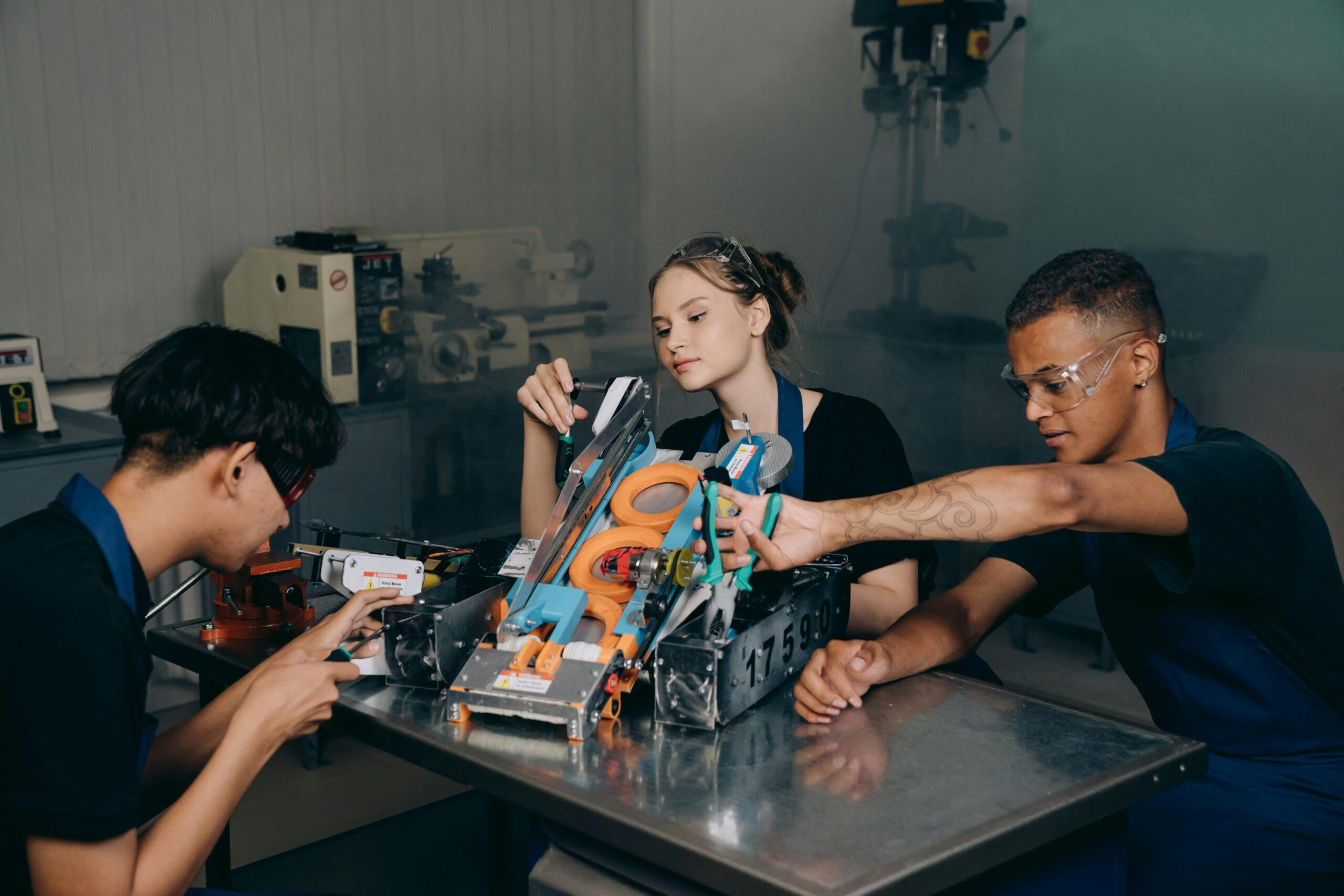
Precision in mechanical systems isn’t just a goal—it’s a necessity. Alignment verification systems have revolutionized how industries maintain equipment efficiency and prevent costly failures.

🎯 Understanding the Foundation of Alignment Technology
In the world of industrial machinery, rotating equipment, and precision manufacturing, even the slightest misalignment can cascade into significant problems. Alignment verification systems represent a sophisticated approach to ensuring that mechanical components operate in perfect harmony, reducing wear, minimizing energy consumption, and extending equipment lifespan dramatically.
These systems have evolved from simple straightedge methods to complex laser-based technologies that can detect deviations measured in thousandths of an inch. The transformation has been nothing short of remarkable, enabling maintenance teams to achieve levels of precision that were unimaginable just a few decades ago.
The Hidden Costs of Misalignment
Before diving deeper into verification systems, it’s crucial to understand what’s at stake when alignment goes wrong. Misalignment doesn’t announce itself with fanfare—it creeps in silently, gradually degrading system performance and inflicting damage that compounds over time.
Manufacturing facilities lose billions annually due to misalignment-related issues. Premature bearing failures, increased vibration, excessive heat generation, and elevated energy consumption all stem from components operating out of proper alignment. A motor misaligned by just 0.002 inches can experience a 50% reduction in bearing life, while energy consumption can increase by up to 15%.
Real-World Impact on Operations
Consider a typical industrial pump system. When the pump and motor shafts aren’t perfectly aligned, the coupling transmits not just rotational force but also unwanted lateral and axial forces. These parasitic loads accelerate wear on seals, bearings, and the coupling itself. The pump operates less efficiently, requiring more electricity to move the same volume of fluid.
Maintenance teams face a difficult choice: conduct reactive repairs after failures occur, or implement proactive alignment verification. The former approach costs significantly more over time, factoring in unexpected downtime, emergency repairs, and lost production. Statistics show that properly aligned equipment can reduce maintenance costs by 20-30% annually.
🔧 How Modern Alignment Verification Systems Work
Contemporary alignment verification systems primarily rely on laser technology, though other methods including dial indicators, optical systems, and even smartphone-based solutions have emerged. Laser shaft alignment tools represent the gold standard for precision and ease of use.
The basic principle involves mounting laser emitters and detectors on the shafts or machine components being aligned. The system measures the position of one shaft relative to another in both vertical and horizontal planes. Advanced systems can simultaneously measure angular and parallel misalignment, providing comprehensive diagnostic data.
The Measurement Process Simplified
A typical laser alignment procedure follows these steps:
- Mounting specialized fixtures on both machine shafts with precision laser units
- Rotating the shafts through specific positions (typically 90-degree increments)
- Capturing measurements at each position to create a complete alignment profile
- Analyzing data through sophisticated software that calculates required corrections
- Making mechanical adjustments based on system recommendations
- Verifying final alignment meets specification tolerances
Modern systems complete this process in minutes rather than hours, and the software provides step-by-step guidance that technicians can follow even without extensive experience. This democratization of precision alignment has transformed maintenance practices across industries.
Different Types of Alignment Challenges
Not all alignment problems are created equal. Verification systems must address several distinct misalignment categories, each with unique characteristics and solutions.
Parallel Misalignment
Also known as offset misalignment, this condition exists when shaft centerlines are parallel but not collinear. Imagine two perfectly straight arrows pointing the same direction but separated by distance. This type of misalignment creates radial forces that stress bearings and seals particularly severely.
Angular Misalignment
Angular misalignment occurs when shaft centerlines intersect at an angle rather than being perfectly parallel. This condition generates both radial and axial loads, potentially causing premature coupling failure and creating excessive axial thrust on bearings not designed to handle such forces.
Combination Misalignment
In real-world scenarios, parallel and angular misalignment typically occur simultaneously. Sophisticated verification systems measure both conditions concurrently, providing comprehensive correction data that addresses all alignment errors in a single adjustment session.
⚙️ Industry Applications and Benefits
Alignment verification systems find application across virtually every industry that relies on rotating machinery. The benefits remain consistent regardless of sector: improved reliability, reduced energy consumption, lower maintenance costs, and extended equipment life.
Manufacturing and Production Facilities
Production environments benefit enormously from precision alignment. Conveyor systems, processing equipment, motors, pumps, and fans all operate more efficiently when properly aligned. Unplanned downtime decreases dramatically, and energy bills reflect measurable savings from equipment operating at optimal efficiency.
Power Generation Plants
Whether nuclear, fossil fuel, or renewable energy facilities, power plants contain critical rotating equipment where alignment precision directly impacts operational availability. Turbines, generators, cooling system pumps, and auxiliary equipment require alignment tolerances measured in thousandths of an inch. Verification systems enable predictive maintenance strategies that prevent catastrophic failures.
Maritime and Offshore Applications
Ships and offshore platforms present unique alignment challenges due to hull flexing, temperature variations, and installation constraints. Specialized alignment verification systems account for these variables, ensuring propulsion systems, generators, and pumping equipment maintain proper alignment despite challenging operating conditions.
Technology Evolution and Innovation
The alignment verification field continues advancing rapidly. Early systems required extensive training and provided limited data visualization. Today’s solutions offer intuitive interfaces, wireless connectivity, cloud-based data management, and integration with broader predictive maintenance platforms.
Wireless and Mobile Solutions
Cutting-edge systems eliminate cables between measurement units and display devices, using Bluetooth or WiFi connectivity. Technicians view real-time alignment data on tablets or smartphones, enabling them to make adjustments while simultaneously monitoring measurement changes. This workflow improvement significantly reduces alignment time and complexity.
Augmented Reality Integration
Emerging technologies incorporate augmented reality overlays that guide technicians through alignment procedures. The system displays virtual adjustment instructions superimposed on live camera views of equipment, making complex procedures accessible to less experienced personnel while reducing error potential.
Predictive Analytics and Machine Learning
Advanced verification systems now incorporate historical data analysis, identifying trends that indicate developing problems before traditional symptoms appear. Machine learning algorithms recognize patterns associated with specific failure modes, enabling truly predictive maintenance strategies rather than reactive or time-based approaches.
📊 Measuring Success: ROI of Alignment Programs
Implementing comprehensive alignment verification programs requires investment in equipment, training, and procedural changes. Understanding return on investment helps justify these expenditures and demonstrates value to organizational leadership.
| Benefit Category | Typical Improvement | Annual Value (Medium Facility) |
|---|---|---|
| Energy Consumption Reduction | 7-12% | $50,000-$150,000 |
| Bearing Life Extension | 50-100% | $30,000-$80,000 |
| Reduced Unplanned Downtime | 20-40% | $100,000-$500,000 |
| Seal and Coupling Life | 100-300% | $20,000-$60,000 |
These figures vary significantly based on facility size, equipment criticality, and previous maintenance practices. Facilities with historically poor alignment practices see more dramatic improvements, while those with existing programs experience incremental gains.
Building an Effective Alignment Culture
Technology alone doesn’t guarantee success. Organizations must cultivate a maintenance culture that values precision alignment and incorporates verification into standard procedures rather than treating it as optional or special-case activity.
Training and Skill Development
Investment in comprehensive training ensures technicians understand not just how to operate alignment equipment but also the underlying principles of shaft alignment, tolerance interpretation, and mechanical adjustment techniques. Cross-training creates redundancy, ensuring alignment capabilities aren’t dependent on single individuals.
Documentation and Standards
Establishing clear alignment standards for different equipment classes provides consistency across maintenance activities. Documentation systems capture baseline measurements, track alignment history, and identify equipment requiring more frequent verification due to operating conditions or historical problems.
Integration with CMMS Platforms
Modern computerized maintenance management systems integrate alignment verification results, automatically scheduling follow-up procedures and tracking compliance with maintenance plans. This integration ensures alignment doesn’t become an isolated activity but rather a core component of comprehensive asset management strategies.
🚀 Overcoming Implementation Challenges
Despite clear benefits, organizations encounter obstacles when implementing alignment verification programs. Understanding these challenges and developing strategies to address them increases success probability.
Resistance to Change
Experienced maintenance personnel sometimes resist new technologies, preferring familiar methods even when those approaches deliver inferior results. Addressing this resistance requires demonstrating value through pilot programs, involving skeptics in technology evaluation, and recognizing early adopters who champion the change.
Budget Constraints
Quality alignment systems represent significant capital expenditures. Building business cases that quantify return on investment helps secure funding. Some organizations start with rental equipment or shared resources before committing to permanent acquisitions, allowing them to demonstrate value before major investment.
Time Pressure During Maintenance Windows
Production facilities face intense pressure to minimize equipment downtime during maintenance activities. Initially, precision alignment may take longer than traditional methods. However, as technicians gain proficiency, alignment time decreases while quality improves. The reduction in repeat maintenance activities more than compensates for any initial time increase.
Future Directions in Alignment Technology
The alignment verification field continues evolving, with several emerging trends pointing toward future capabilities that further enhance precision and efficiency.
Continuous monitoring systems that detect alignment drift in real-time represent one significant development area. Rather than periodic verification, permanently installed sensors provide constant feedback, alerting maintenance teams when alignment degrades beyond acceptable tolerances. This approach enables condition-based maintenance at an unprecedented level.
Integration with digital twin technologies allows organizations to model equipment behavior under various alignment conditions, predicting performance changes and optimizing alignment specifications for specific operating conditions rather than relying on generic manufacturer recommendations.
Artificial intelligence applications will increasingly analyze alignment data across equipment populations, identifying patterns that human analysts might miss and providing insights that drive continuous improvement in maintenance practices.
💡 Practical Steps to Get Started
Organizations seeking to implement or improve alignment verification programs should consider a structured approach that builds capability systematically rather than attempting wholesale transformation overnight.
Begin by identifying critical equipment where alignment has the greatest impact—typically high-power motors, process pumps, and equipment with histories of bearing or coupling failures. Establishing baseline measurements on this equipment provides data for comparing future improvements.
Select alignment technology appropriate for your application mix. While top-tier systems offer advanced features, mid-range solutions deliver excellent results for many applications at lower cost. Consider equipment ergonomics, software usability, and vendor support quality alongside technical specifications.
Develop standardized procedures that guide technicians through alignment processes consistently. Include tolerance specifications, documentation requirements, and escalation protocols for equipment that won’t achieve acceptable alignment.
Establish metrics that track program effectiveness—alignment compliance rates, equipment reliability improvements, energy consumption trends, and maintenance cost reductions. Regular review of these metrics demonstrates value and identifies opportunities for further refinement.

The Precision Imperative
In an increasingly competitive global economy, operational excellence separates industry leaders from also-rans. Alignment verification systems provide measurable, sustainable improvements in equipment reliability, energy efficiency, and maintenance effectiveness. These aren’t abstract benefits—they translate directly to enhanced profitability and competitive advantage.
The technology has matured to the point where implementation barriers have largely disappeared. Systems are intuitive, affordable, and deliver rapid return on investment. Organizations that haven’t yet embraced precision alignment verification risk falling behind competitors who have already captured these benefits.
More importantly, as equipment becomes more sophisticated and performance expectations continue rising, the margin for error continues shrinking. What might have been acceptable alignment in previous decades no longer meets modern requirements. Precision isn’t optional—it’s essential for remaining competitive in today’s industrial landscape.
The power of alignment verification systems extends beyond individual equipment improvements. These tools enable fundamental transformation in how organizations approach maintenance, shifting from reactive firefighting to proactive optimization. That cultural change, more than any single technical capability, represents the true power of alignment verification—the ability to elevate maintenance from necessary cost center to strategic advantage.